
What a Sales Funnel Actually Is (and Why It Doesn’t Have to Feel Icky)
The word “funnel” makes a lot of thoughtful creators wince. It sounds mechanical. Manipulative, even — like something you’d need to scrub off afterward. And the way it’s usually taught, in the loud, high-pressure corners of the internet, that reputation is earned.
But here’s what a funnel actually is, underneath the hype: a path you build so that caring for someone doesn’t depend on you being available.
That’s it. That’s the whole thing. Let me walk you through it, gently, and show you why the right funnel is one of the most caring things you can build for the people who find you.
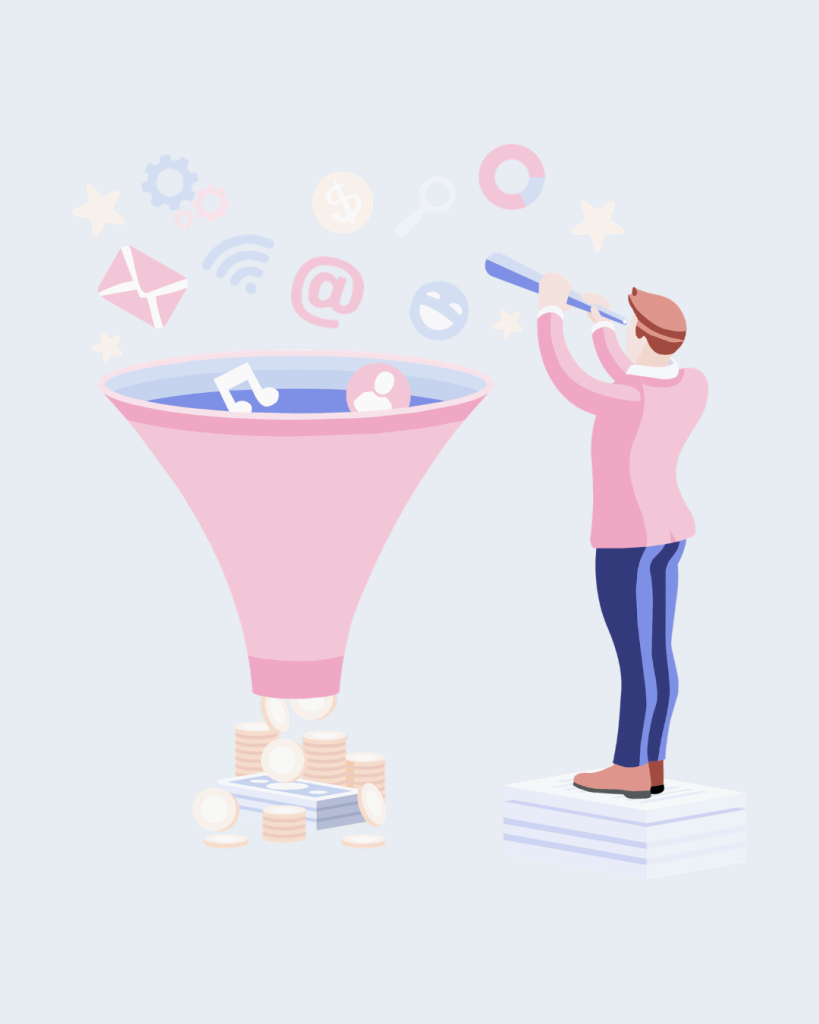
A funnel is just a well-tended path
Imagine someone discovers your work today. What happens next?
Without a system, the answer is usually: it depends.
It depends on whether you happen to email that week. Whether they happen to see your offer. Whether they stumble onto the right thing at the right moment.
You’re leaving the care of new people up to chance — and chance is a poor host.
A funnel replaces chance with intention. It’s a path that welcomes someone, builds trust with them over time, and — when they’re ready — invites them to take a step toward what you offer. Not by pressuring them. By being genuinely helpful, in the right order, at the right pace, automatically.
When it’s built well, a funnel means no one falls through the cracks. Everyone who finds you is welcomed and cared for, whether you’re at your desk or at the dinner table. That’s the quiet magic of it.
The stages, gently explained
A complete funnel has a few parts. Here’s what each one is really doing:
- The lead magnet. A free, genuinely useful gift that someone receives in exchange for their email. This is the front door — a warm hello, and the start of the relationship.
- The nurture series. A series of emails that arrive automatically, building trust and offering value. This is where a stranger becomes someone who knows you, likes you, and believes you can help. (Your welcome sequence lives here.)
- The tripwire. A small, low-priced first offer — an easy yes. The first time someone buys from you, something shifts: they’ve crossed from follower to customer, and that relationship deepens. A tripwire makes that first step gentle and affordable.
- The main offer. Your signature course, program, or product — the real transformation you’re here to provide. By the time someone reaches it, they already trust you, because every stage before it earned that trust.
- The order bump. A small, relevant “add this too” at checkout. No pressure — just a helpful option for someone who’s already saying yes.
- The upsell. A warm, one-time invitation after purchase to go deeper. Again, not pressure — a natural next step for someone who’s excited.
Read that list again and notice what it isn’t: it isn’t a trick. It’s a sequence of increasingly warm invitations, each one earned by the value that came before it. Every stage serves the person, not just the sale.
Why this is the opposite of hustle
Here’s the part that matters most for a slow-living business.
The loud version of online business says: launch constantly, be everywhere, sell hard, repeat until exhausted. A slow, intentional funnel says the opposite. Build it once, well, and let it work quietly in the background — so you don’t have to be everywhere, selling all the time.
A complete funnel is what lets a business run gently while you rest. It means income that isn’t tied to your constant presence. It means being able to close the laptop and be with your family, knowing that new people are still being welcomed, nurtured, and served — with care, in your voice, on your behalf.
That’s not hustle. That’s the freedom hustle keeps promising and never delivering.
The mistakes that make funnels feel gross
- Skipping the trust. Funnels feel icky when they rush to the sale. The nurturing is not the boring part before the money — it is the point. Trust earned is what makes an invitation feel welcome instead of pushy.
- Fake urgency and pressure. You never have to manufacture panic. A good offer, offered warmly to the right person, doesn’t need tricks.
- Disconnected pieces. A lead magnet here, an email tool there, a checkout that doesn’t talk to anything — the result is leaks and chaos. A funnel works because every piece is connected.
Let me build yours — connected, tested, and calm
If you have an offer you believe in and you’re ready for a real system instead of a pile of disconnected pieces, this is the work I most love to do.
In a Complete Funnel Build-Out, I build every stage — lead magnet, nurture series, tripwire, main offer, order bump, and upsell — write it in your voice, connect the whole stack (email, checkout, community, automations), and run a real purchase through the entire thing before a single customer does. You end up with a business that welcomes, nurtures, and sells gently, on its own.
You bring the gift and the people. I’ll build the path that quietly cares for them.
…and let’s talk about what running gently could look like for you.
